
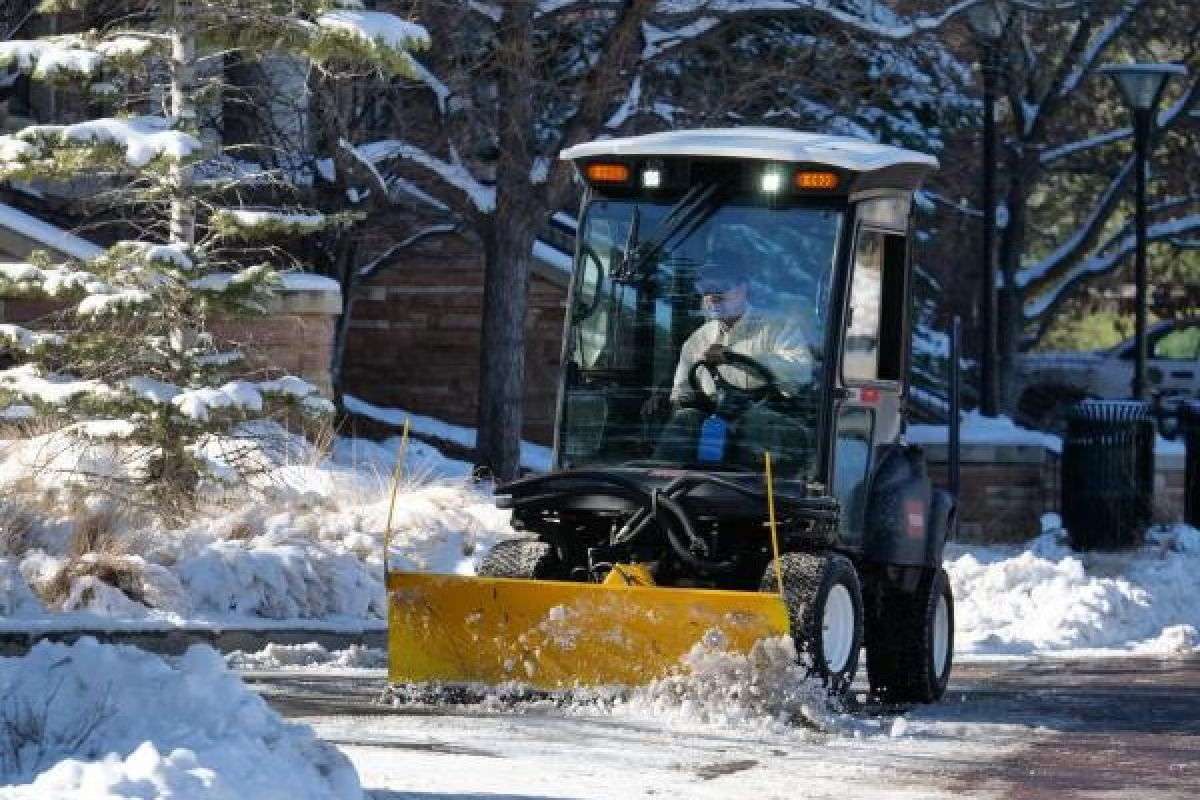
(Image Courtesy of University of Colorado Boulder’s Facilities Management)
Alexia: Hi! I’m Alexia Bailey, a sophomore here at CU Boulder. While I may just be in my second year, I’m here to share everything I’ve picked up so far, which is a surprising amount of information. “What’s Eating at Alexia” is my unofficial and unfiltered guide to some of the things that being a CU Boulder Buff brings. Think of it as your guide to navigating everything that makes CU Boulder, well, CU Boulder. Whether you’re a freshman finding your footing or a senior with “no body, no crime” level grievances about finals week, I’m here to share my takes, tips and honest observations on everything from the sometimes-unpredictable Buff Bus system to navigating campus protests (or dodging them entirely). College is a wild, unforgettable ride, and “What’s eating at Alexia” is here to make sense of some of it, one opinion at a time.
I love going to the University of Colorado Boulder during the fall semester. I mean, imagine it: orange-brown leaves falling, the buzz of a football game and the excitement over classes (or more importantly, what your friends are doing after classes let out). However, when it comes to the spring semester, it’s like a light switch has been turned on, and all of the cracks in CU’s accessibility facade are illuminated.
A total of 6.4 inches of snow fell in Boulder County between Jan. 8 and 9, according to 9 News. And, unfortunately for CU students, those were our first two days of the 2026 spring semester. Snow is something that the university’s campus is well-versed in. Every year from the months of November to May, snow falls periodically, covering the Flatirons like powdered sugar on a well-made doughnut. And yet, dearest readers, when snow falls, it’s as if no one on campus has ever seen it before. Students shuffle across the sidewalks in sneakers, Buff Buses slide just slightly off schedule, and bikes disappear from racks like they’ve gone into hibernation. All of this to say, no one handles snow worse than CU.
As someone with a disability, the way that the university handles snowy and icy conditions is really frustrating. Common paths take hours to be shoveled, most buses are covered in slippery puddles and black ice covers the roads that surround the school. It leaves students slipping and falling, and for those with disabilities, those slips can lead to serious injuries or worsen existing conditions. The result is that simply getting to class becomes inaccessible, which is unfair to everyone.
At CU Boulder, snow removal at CU Boulder is a coordinated effort shared among several campus departments, according to the school’s Facilities Management website. Facilities Management is responsible for maintaining the main sidewalks, ADA ramps and primary walkways, while Housing and Dining Services oversee areas near residence halls and dining centers. The Athletics department clears fields, stadiums and nearby paths and Parking Services is in charge of parking lots and surrounding walkways. Student Government also plays a role, overseeing snow removal for buildings and spaces it operates, including the Recreation Center.
On paper, that division of responsibility sounds thorough. But in practice, it often feels like no one is truly accountable. A single unshoveled ramp or icy walkway can turn a simple trip to class into an obstacle course. While some areas, like the UMC or Norlin Quad, are cleared quickly, others stay buried under slush for hours, sometimes days. Accessibility shouldn’t depend on which department happens to “own” a patch of sidewalk. The university prides itself on its commitment to inclusion and accessibility, but the snow season exposes just how fragile that promise can be. This issue is about safety and equal access to education. When certain students can’t navigate campus safely, that’s not a weather problem; it’s a policy problem.
During that first week of classes, I watched as students tried to navigate the maze of snow and ice outside the Visual Arts Complex. One student slipped and fell on a patch of ice; others resorted to walking on the grass, which is uneven and snowy. Getting on and off a Buff Bus is another story, too. It’s difficult to even board a bus with the ice lining the edge of every sidewalk, and getting off is more of a gymnastic sport than an easy step-off and go.
What makes all of this worse is the inconsistency. Some paths are spotless by noon, while others remain untouched even into the next day. You couldn’t pay me to walk down the path to the Armory building after it snowed. CU Boulder often emphasizes sustainability and inclusivity, but accessibility should be part of that same conversation. What good is an “inclusive” campus if parts of it are literally impossible to reach? Improving snow removal might not sound like a glamorous initiative, but it’s one of the most visible ways the university can show it values all its students.
Maybe that means increasing coordination between departments, hiring more student workers during heavy snow days, or setting a campus-wide standard for how quickly ADA routes must be cleared. The Facilities Management website states that their “snow removal teams focus on keeping ADA ramps and primary walkways clear to ensure campus safety and accessibility,” but I’m not seeing that. So, whatever the solution looks like, not just telling people to go contact Disability Services, starts with acknowledging that this is not just one department’s issue, it’s everyone’s. Because when the snow starts falling, CU shouldn’t just be known for its beautiful mountain backdrop. It should be known for how well it takes care of the people who call this campus home.
Contact CU Independent Opinion Editor Alexia Bailey at alexia.bailey@colorado.edu
